
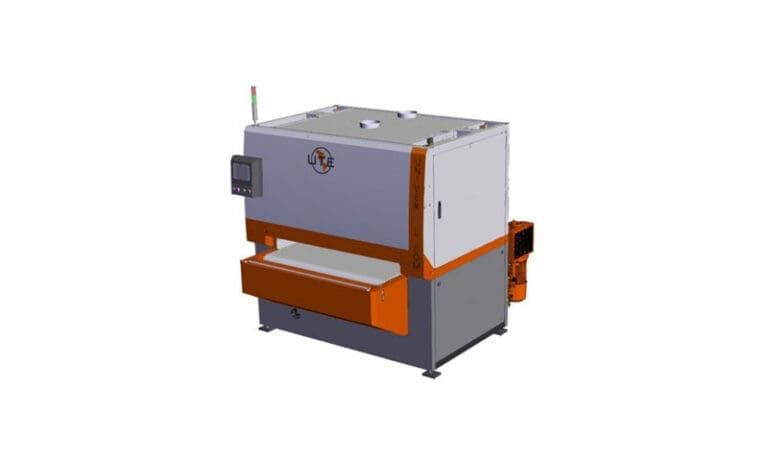
Manufacturers are constantly looking for ways to increase throughput, reduce labor costs, and improve part quality. One area that often gets overlooked is deburring.
While manual deburring has long been the industry standard, many fabrication shops are discovering that automated deburring systems can significantly reduce operating costs while improving consistency and productivity.
If your team spends hours grinding edges, removing slag, or preparing parts for welding and finishing, it may be time to compare the true cost of manual deburring versus automated deburring.
Quick Answer: Is Automated Deburring More Cost Effective?
Yes. For most fabrication shops producing moderate to high volumes of laser-cut or punched parts, automated deburring is typically more cost effective than manual deburring.
Automated deburring machines can:
- Reduce labor requirements
- Improve throughput
- Deliver consistent edge quality
- Minimize operator fatigue
- Lower rework rates
- Improve downstream processes such as welding and powder coating
Although automated systems require a larger upfront investment, many manufacturers achieve ROI within one to three years through labor savings and increased production capacity.
What Is Manual Deburring?
Manual deburring is the process of removing burrs, dross, slag, and sharp edges using handheld tools such as:
- Angle grinders
- Orbital sanders
- Flap discs
- Wire brushes
- Hand files
The process depends heavily on operator skill and can vary significantly from one employee to another.
Advantages of Manual Deburring
- Lower initial investment
- Suitable for low-volume production
- Flexible for specialty parts
- No major equipment purchase required
Disadvantages of Manual Deburring
- High labor costs
- Inconsistent results
- Increased risk of operator injury
- Slower production speeds
- Difficult to scale as production grows
What Is Automated Deburring?
Automated deburring uses specialized machinery to remove burrs, sharp edges, and surface imperfections consistently across large batches of parts.
Modern systems can process:
- Laser-cut steel
- Stainless steel
- Aluminum
- Punched components
- Formed parts
Automated deburring equipment helps standardize finishing operations while significantly reducing the amount of manual labor required.
Manual Deburring vs. Automated Deburring: Cost Comparison
The biggest difference between manual and automated deburring is labor efficiency.
Consider a fabrication shop processing hundreds of parts per day.
| Factor | Manual Deburring | Automated Deburring |
|---|---|---|
| Labor Requirements | High | Low |
| Consistency | Operator Dependent | Highly Consistent |
| Throughput | Limited | High |
| Operator Fatigue | High | Minimal |
| Scalability | Difficult | Excellent |
| Rework Risk | Higher | Lower |
| Long-Term Operating Cost | High | Lower |
Example Labor Cost Calculation
Assume:
- 2 full-time employees
- $25/hour fully burdened labor cost
- 40 hours per week
- 50 working weeks per year
Annual labor cost:
2 × $25 × 40 × 50 = $100,000 per year
If an automated deburring system allows one employee to be reassigned to higher-value work while increasing throughput, the labor savings alone can be substantial.
For many manufacturers, labor reduction becomes one of the primary drivers behind investing in automated finishing equipment.
How Automated Deburring Improves Production Efficiency
Faster Part Processing
Automated systems can process parts continuously, helping eliminate bottlenecks between cutting and downstream operations.
Consistent Edge Quality
Uniform edge finishing helps improve:
- Welding performance
- Powder coating adhesion
- Assembly fitment
- Overall product quality
Reduced Rework
Inconsistent deburring often creates quality issues that require additional processing. Automated systems help reduce variation and improve repeatability.
Improved Workplace Safety
Replacing handheld grinding operations with automated machines may reduce employee exposure to:
- Repetitive motion injuries
- Flying debris
- Excessive vibration
- Grinding dust
When Does It Make Sense to Automate Deburring?
Many shops begin evaluating automated deburring when they notice:
- Growing production backlogs
- Increased overtime
- Difficulty hiring skilled labor
- Inconsistent edge quality
- Rising finishing costs
- Excessive grinding after laser cutting
If your team spends several hours each day removing burrs by hand, an automated solution may offer significant savings over time.
Industries That Benefit Most from Automated Deburring
Automated deburring systems are commonly used in:
- Contract manufacturing
- Sheet metal fabrication
- Agricultural equipment manufacturing
- Aerospace suppliers
- Industrial equipment manufacturing
- HVAC production
- Automotive suppliers
Any operation processing large volumes of laser-cut or punched parts can potentially benefit from reducing manual finishing requirements.
Why Fabricators Are Investing in Automated Deburring Equipment
The modern fabrication environment demands more than just cutting parts quickly. Manufacturers must also:
- Improve labor efficiency
- Control operating costs
- Maintain consistent quality
- Shorten lead times
- Increase throughput
As labor shortages continue to impact manufacturing, many shops are turning to automated deburring systems to help maximize productivity without increasing headcount.
Companies working with Universal Tool & Engineering can evaluate deburring solutions alongside laser cutting, bending, and fabrication workflows to identify opportunities for efficiency improvements throughout the production process.
Frequently Asked Questions
Is automated deburring worth the investment?
For many fabrication shops, yes. Automated deburring can reduce labor costs, improve part consistency, increase throughput, and lower rework rates, often producing a return on investment within one to three years.
How much labor can an automated deburring machine save?
The amount varies by production volume, but shops frequently reduce manual finishing hours significantly by automating repetitive deburring tasks.
What materials can be automatically deburred?
Most modern deburring machines can process carbon steel, stainless steel, aluminum, and other commonly fabricated metals.
Does laser-cut steel still need deburring?
Yes. Even high-quality laser-cut parts can have sharp edges, micro-burrs, or dross that may affect welding, coating, assembly, or worker safety.
Is automated deburring better than grinding by hand?
For high-volume production, automated deburring typically provides greater consistency, lower labor costs, faster throughput, and improved quality compared to manual grinding methods.
How long does it take for a deburring machine to pay for itself?
Many fabrication shops achieve payback within one to three years, depending on labor costs, production volume, and current finishing requirements.
Final Thoughts
While manual deburring still has a place in some low-volume applications, automated deburring continues to provide a clear advantage for growing fabrication operations.
By reducing labor dependency, improving consistency, and increasing throughput, automated deburring systems can help manufacturers streamline production and improve profitability.
For fabrication shops looking to reduce finishing bottlenecks and improve overall efficiency, investing in automated deburring technology may be one of the most impactful upgrades available today.