
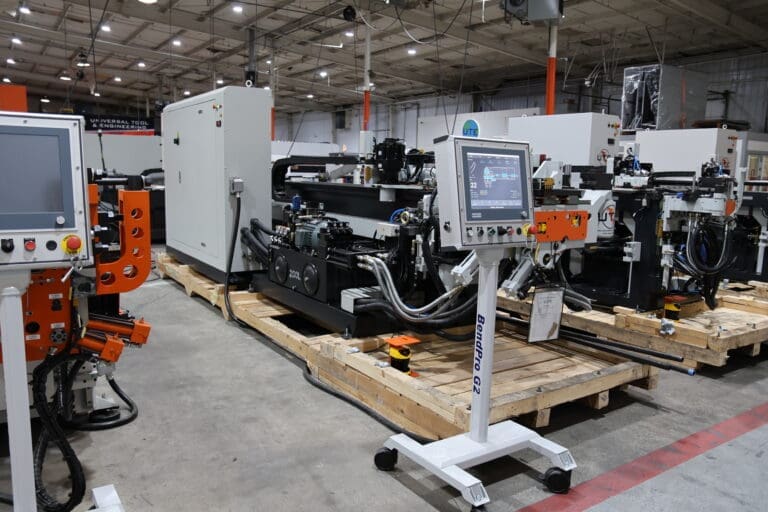
As demand for precision fabrication continues to grow, manufacturers are increasingly evaluating whether a hydraulic CNC tube bender or an all-electric CNC tube bender is the best fit for their operation. While both technologies are capable of producing high-quality bends, the right choice depends on your production volume, part complexity, budget, and long-term manufacturing goals.
For many fabricators, the question isn’t which technology is universally better, but which solution delivers the greatest value for their specific application.
Understanding the Difference
The primary difference between hydraulic and all-electric tube benders lies in how machine movements are powered.
Hydraulic CNC Tube Benders
Hydraulic tube benders use hydraulic cylinders and pumps to generate force for bending and machine movements. These machines have been a staple of the tube fabrication industry for decades due to their reliability and ability to handle demanding applications. Common advantages include:- Lower initial purchase cost
- High bending force capability
- Proven technology
- Excellent performance for heavy-wall tubing
- Ideal for larger diameter applications
All-Electric CNC Tube Benders
All-electric tube benders replace hydraulic systems with servo-driven electric motors. Each machine axis is independently controlled, resulting in highly precise movements and greater process control. Benefits typically include:- Exceptional bend repeatability
- Faster setup times
- Lower operating costs
- Reduced maintenance requirements
- Improved energy efficiency
- Quieter operation
Comparing Performance
Accuracy and Repeatability
When it comes to precision, all-electric machines generally have the advantage. Servo-driven technology allows manufacturers to precisely control:- Bend angle
- Rotation
- Feed length
- Boost pressure
- Multi-radius bending sequences
- Aerospace
- Automotive
- Medical equipment
- Defense
- High-performance motorsports
Raw Bending Power
Hydraulic systems excel when maximum force is required. Fabricators working with:- Thick-wall tubing
- Large-diameter pipe
- Heavy structural components
- Tough alloy materials
Setup and Changeover Times
Today’s manufacturing environment often involves high-mix, low-volume production. Shops frequently change between:- Different tube diameters
- Multiple bend radii
- Various material types
- Short production runs
- Faster changeovers
- Improved scheduling flexibility
- Lower labor requirements
- Greater machine utilization
Energy Consumption
Energy costs continue to be a growing concern for metal fabricators. Hydraulic machines typically run hydraulic pumps continuously while operating, consuming power regardless of whether the machine is actively bending. All-electric machines consume energy only when movement occurs. As a result, all-electric tube benders often:- Use less electricity
- Generate less heat
- Reduce cooling requirements
- Lower overall operating expenses
Maintenance Considerations
Maintenance is another important factor when comparing technologies.
Hydraulic Machine Maintenance
Hydraulic systems require periodic attention, including:- Fluid changes
- Hose inspections
- Seal replacements
- Pump maintenance
- Leak prevention
All-Electric Machine Maintenance
Electric machines eliminate many of the components associated with hydraulic systems. This often results in:- Fewer consumable parts
- Cleaner operation
- Reduced maintenance labor
- Less unplanned downtime
Which Industries Prefer All-Electric Machines?
All-electric CNC tube benders are commonly found in industries where precision and repeatability are mission-critical. Examples include:
Aerospace
Aircraft components often require complex, highly accurate tube geometries with minimal variation.
Automotive
High-volume production benefits from the repeatability and fast cycle times of servo-driven systems.
Medical Manufacturing
Medical equipment manufacturers rely on extremely precise tubing components and strict quality standards.
Motorsport and Performance Applications
High-performance tube structures require consistent bends and tight tolerances.
Which Industries Still Choose Hydraulic Machines?
Hydraulic tube benders remain highly effective in many sectors. They are frequently used for:
Agriculture Equipment
Heavy-wall tubing and structural frames often require significant bending force.
Construction Equipment
Large components can benefit from the robustness of hydraulic systems.
Industrial Fabrication
Many general fabrication shops appreciate the balance of performance, reliability, and affordability.
Structural Manufacturing
Applications prioritizing bending capacity over extreme precision often favor hydraulic equipment.
Cost: Initial Investment vs Long-Term Value
One of the biggest factors influencing purchasing decisions is cost.
Hydraulic Bender Advantages
- Lower upfront investment
- Strong performance for many applications
- Proven and familiar technology
- Excellent value for moderate production requirements
All-Electric Bender Advantages
- Lower energy consumption
- Reduced maintenance costs
- Higher productivity
- Improved repeatability
- Faster return through efficiency gains
So Which Is Better?
The answer depends entirely on your production goals. Choose a hydraulic CNC tube bender if:- You prioritize lower upfront cost.
- You process large or heavy-wall tubing.
- Your applications require substantial bending force.
- Extreme precision is not your primary driver.
- Repeatability and accuracy are critical.
- You run frequent changeovers.
- Energy efficiency is important.
- You want to minimize maintenance.
- You are pursuing higher levels of automation.