
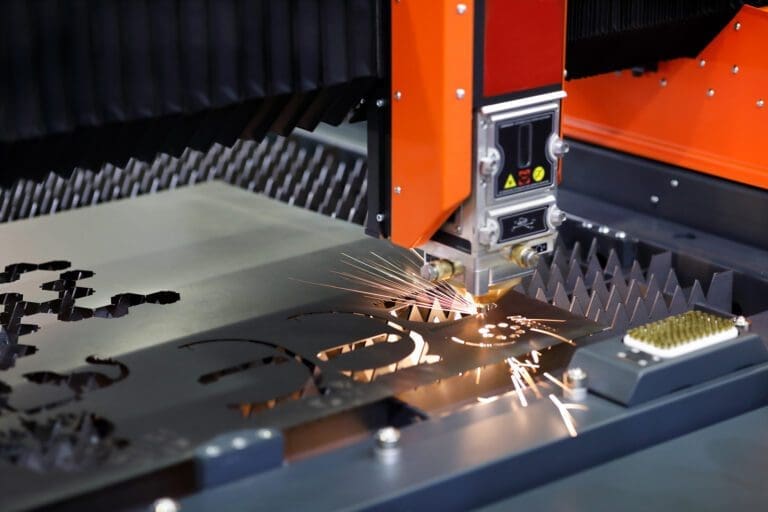
As labor shortages, rising production demands, and increasing customer expectations continue to reshape the fabrication industry, more manufacturers are investing in automated sheet and tube laser cutting systems. Automation offers the promise of greater throughput, improved consistency, and reduced reliance on manual labor. However, many fabrication facilities discover that simply adding automation does not automatically eliminate production bottlenecks.
In 2026, the greatest opportunities and the biggest challenges in laser cutting automation revolve around integration. The highest-performing operations are not necessarily those with the fastest lasers. They are the facilities that successfully connect machines, material handling systems, software, operators, and downstream processes into a cohesive workflow.
For manufacturing engineers and production managers, understanding these integration challenges is critical to maximizing the return on automation investments.
Why Automation Projects Fall Short of Expectations
Many fabricators purchase advanced laser systems expecting immediate gains in productivity. While cutting technology continues to improve, overall performance is often limited by factors outside the laser itself.
A modern sheet or tube laser can process material at remarkable speeds, but production slows dramatically when:
- Raw material is not available when needed
- Finished parts cannot be removed quickly enough
- Secondary operations become overwhelmed
- Production schedules constantly change
- Maintenance issues create unplanned downtime
In most cases, the laser is not the bottleneck. The surrounding workflow is.
The most successful automation projects focus on optimizing the entire workcell rather than concentrating solely on cutting speeds.
Challenge #1: Facility Layout and Workcell Design
Layout remains one of the most overlooked factors affecting automated sheet and tube laser cutting performance.
Many manufacturers attempt to integrate automation into facilities that were originally designed around manual operations. As production volume increases, inefficient layouts create unnecessary movement, material handling delays, and congestion.
Common layout issues include:
- Long distances between storage and the laser
- Shared forklift traffic routes
- Limited space for automated loading systems
- Poor access to downstream operations
- Congested staging areas
Every extra material movement introduces additional labor costs and opportunities for delays.
An effective automated workcell should minimize travel distances while maintaining clear, uninterrupted material flow from receiving through final production.
Signs Your Layout Is Limiting Performance
- Operators frequently wait on material deliveries
- Forklift traffic creates production interruptions
- Finished parts accumulate near machines
- Multiple departments compete for the same floor space
- Production schedules require excessive material movement
A well-designed workcell reduces non-value-added activities and allows the laser to operate continuously.
Challenge #2: Material Handling Integration
Material handling often determines whether an automation project succeeds or struggles.
Even the most advanced laser system cannot operate efficiently without a reliable supply of material. This becomes increasingly important as laser power and cutting speeds continue to increase.
For both sheet metal cutting and tube laser cutting, manufacturers must address several material-handling challenges:
Sheet Material Handling
Sheet laser operations often face delays caused by:
- Manual loading processes
- Inadequate material staging
- Incorrect sheet selection
- Storage locations that are too far from production
Automated storage towers, pallet changers, and loading systems help maintain a steady supply of material while reducing forklift dependency.
Tube Material Handling
Tube processing introduces additional complexity.
Different tube lengths, diameters, wall thicknesses, and material types often require specialized loading strategies. Production interruptions frequently occur when operators must manually reposition bundles or prepare materials between jobs.
Efficient tube handling systems ensure that raw material is consistently available and correctly staged for uninterrupted operation.
Challenge #3: Managing Part Flow After Cutting
Many automation projects focus heavily on loading material into the machine but overlook what happens after cutting.
The reality is that a laser’s productivity is limited by how efficiently finished parts move through the rest of the facility.
Without a defined part-flow strategy, manufacturers often encounter:
- Overflowing unload stations
- Excessive manual sorting
- Mixed production orders
- Lost parts
- Delays in secondary operations
These problems become even more significant as throughput increases.
Sheet Part Flow Challenges
In high-volume sheet processing, hundreds or even thousands of parts may be produced each shift. If parts cannot be stacked, sorted, or transferred efficiently, productivity quickly declines.
Tube Part Flow Challenges
With tube laser cutting, finished components frequently vary in length, geometry, and destination.
Different parts may require:
- Bending
- Welding
- End forming
- Machining
- Assembly
Without proper routing procedures, operators spend valuable time organizing parts rather than supporting production.
The most successful facilities create a continuous flow where parts move directly from cutting into downstream operations with minimal handling.
Challenge #4: Coordinating Multiple Automated Systems
As industrial automation expands throughout fabrication facilities, integration between systems becomes increasingly important.
A fully automated laser workcell often includes:
- Storage systems
- Loading and unloading automation
- Material transport equipment
- ERP software
- Production scheduling systems
- Press brakes
- Tube benders
- Robotic welding systems
Each element must communicate effectively with the others.
When systems operate independently, problems quickly emerge:
- Production priorities become misaligned
- Material arrives at the wrong time
- Secondary processes fall behind
- Work-in-progress inventory increases
Manufacturing engineers should evaluate automation as a connected production ecosystem rather than a collection of individual machines.
Challenge #5: High-Mix Production Requirements
Many fabrication businesses have moved away from long production runs and toward higher product variety.
While automation excels with repetitive processes, high-mix manufacturing introduces unique manufacturing challenges.
Frequent changeovers may involve:
- Different sheet thicknesses
- Various tube profiles
- Custom materials
- Small batch sizes
- Urgent customer requests
As product diversity increases, scheduling and machine utilization become more difficult to manage.
Modern automation systems must provide flexibility without sacrificing efficiency. Features such as automatic setup adjustments, intelligent nesting software, and smart job scheduling have become increasingly important for maintaining productivity in mixed-production environments.
Challenge #6: Uptime and Long-Term Support
The most advanced automated workcell has little value if it cannot consistently stay operational.
Many manufacturers focus on machine specifications during the purchasing process while underestimating the importance of support infrastructure.
Common causes of downtime include:
- Lack of preventive maintenance
- Delayed service response
- Software communication issues
- Component failures
- Insufficient operator training
These disruptions have a direct impact on production output and profitability.
Key Questions to Ask Before Investing
- How quickly can service technicians respond?
- Are replacement parts stocked locally?
- What operator training is provided?
- How easily can automation be expanded in the future?
- What maintenance requirements are expected?
Long-term uptime often depends more on service and support than on the machine itself.
Preparing for the Future of Laser Automation
As fabrication technology continues to evolve, manufacturers should view automation as a long-term operational strategy rather than a standalone equipment purchase.
The facilities that achieve the greatest success with automated sheet and tube laser cutting are those that:
- Design efficient workcells
- Optimize material flow
- Eliminate handling bottlenecks
- Coordinate downstream operations
- Prioritize uptime and support
- Plan for future growth
By addressing these challenges before implementation, manufacturers can unlock the full benefits of automation while avoiding many of the common obstacles that limit performance.
Conclusion
In 2026, the biggest challenges in laser cutting automation are no longer tied solely to the cutting process itself. Facility layout, material handling, part flow, workcell integration, scheduling complexity, and support infrastructure have become the primary factors that determine success.
For manufacturing engineers and production managers, the goal should be creating a fully connected manufacturing environment where every component works together seamlessly. When done correctly, automated sheet and tube laser cutting delivers higher throughput, greater efficiency, improved consistency, and the flexibility needed to remain competitive in an increasingly demanding manufacturing landscape.
Universal Tool & Engineering helps metal fabricators develop automation strategies that go beyond machine selection, ensuring every aspect of the production process is optimized for performance, scalability, and long-term success.