
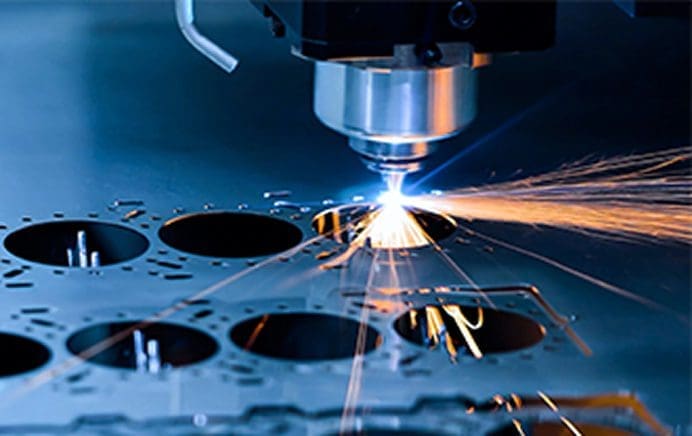
For mid-sized metal fabricators, investing in a fiber laser cutting machine is one of the most significant equipment decisions you’ll make. Whether you’re processing sheet metal, structural tubing, or looking to automate production, selecting the right system can directly impact throughput, labor utilization, material costs, and profitability.
With fiber laser technology continuing to advance, buyers need to look beyond laser power alone and evaluate machine design, automation capabilities, support, and long-term production requirements. Here are the key factors to consider when choosing a fiber laser cutting machine for your fabrication operation.
1. Match the Machine to Your Primary Material Type
The first question is simple: What are you cutting most often?
Different fiber laser platforms are optimized for different applications:
- Sheet lasers are ideal for flat sheet metal production, nested parts, and high-volume manufacturing.
- Tube lasers are designed for round, square, rectangular, oval, angle, and channel profiles.
- Combo sheet and tube lasers offer flexibility for shops processing both material types.
Universal Tool & Engineering (UTE) offers dedicated sheet laser systems, tube laser systems, and combination machines to accommodate varying production requirements. Their machine lineup is designed to support everything from low-volume job shops to high-output manufacturers.
Buying Tip: If 80% or more of your production involves one material type, a dedicated machine often delivers the best productivity. If your workloads vary significantly, a combo machine may provide greater operational flexibility.
2. Evaluate Laser Power Based on Production Goals
Many buyers assume higher wattage is always better. In reality, the right power level depends on:
- Material thickness
- Production volume
- Desired cutting speed
- Future growth plans
UTE fiber laser systems are available with laser sources ranging from approximately 3 kW up to 30 kW, enabling fabricators to select a system aligned with their current and anticipated production demands.
Consider:
- Lower-power systems for lighter-gauge materials and general fabrication
- Mid-range systems for mixed-production environments
- Higher-power systems for thicker materials and maximum throughput
Buying Tip: Purchase for where your business will be in three to five years, not just where it is today.
3. Look Beyond Power and Focus on Accuracy
A machine’s cutting quality depends heavily on positioning accuracy and motion control.
UTE fiber laser systems feature:
- Auto-focusing laser heads
- Positioning accuracy as precise as ±0.001 inches on certain models
- High-acceleration CNC motion systems
- Precision tube positioning and repeatability systems
For manufacturers serving industries such as automotive, aerospace, fitness equipment, and industrial fabrication, consistent accuracy can reduce secondary operations and improve part quality.
Buying Tip: Request cut samples representative of your actual production parts.
4. Consider Maximum Workpiece Size and Capacity
Growth often exposes machine limitations.
Before purchasing, evaluate:
For Sheet Processing
- Maximum sheet dimensions
- Table load capacity
- Available work area
UTE’s PHUS series offers working areas up to 6050 × 2530 mm, providing capacity for larger parts and more efficient nesting.
For Tube Processing
Assess:
- Maximum tube diameter
- Tube length
- Material shape compatibility
UTE tube laser systems process:
- Round tube
- Square tube
- Rectangular tube
- Oval profiles
- Angle iron
- Channel steel
- Structural shapes
Buying Tip: Make sure your machine can accommodate future product lines without requiring a second laser purchase.
5. Assess Automation Capabilities Early
Automation is no longer reserved for large manufacturers.
As labor shortages continue affecting fabricators, automation can significantly improve productivity and machine utilization.
Key automation considerations include:
- Automatic loading and unloading
- Material handling systems
- Exchange tables
- Automated feeding systems
- Robotic part processing
- Integrated production workflows
UTE’s tube lasers feature intelligent feeding systems and automatic material handling options, while their combo systems utilize exchange platforms that reduce loading and unloading time between jobs.
Buying Tip: Even if automation is not needed today, select a machine platform that can support automation upgrades later.
6. Evaluate Machine Construction and Durability
A laser cutter is a long-term capital investment. Build quality matters.
UTE fiber laser machines utilize:
- Rigid welded steel frames
- Aviation-grade aluminum components
- Centralized automated lubrication systems
- Industrial-grade motion platforms designed for continuous production environments
A robust machine structure helps maintain accuracy, reduce vibration, and improve long-term reliability.
Buying Tip: Ask about frame construction, component quality, and maintenance requirements before comparing price alone.
7. Prioritize Software and Ease of Use
Modern fiber lasers are software-driven production systems.
Look for:
- User-friendly controls
- Automated nesting
- Tube-specific programming
- Part libraries
- Production reporting
- Integration with existing workflows
UTE tube laser systems incorporate specialized tube cutting software capable of handling a variety of profile geometries while supporting high-precision cutting operations.
Buying Tip: The easiest machine to program is often the most productive machine on the shop floor.
8. Examine Service, Training, and Technical Support
Even the most advanced laser is only as valuable as the support behind it.
UTE includes:
- Installation assistance
- Three-day training programs
- 24/7 technical support
- USA-based service personnel
- Nationwide support with technicians capable of arriving on-site quickly when needed
Downtime is expensive, making service responsiveness a major purchasing factor.
Buying Tip: Ask suppliers about average service response times, spare parts availability, and training resources.
9. Account for Total Cost of Ownership
The lowest purchase price is rarely the lowest cost solution.
Evaluate:
- Machine productivity
- Maintenance expenses
- Consumables
- Operator efficiency
- Warranty coverage
- Service availability
- Material utilization
Features such as intelligent feeding systems, efficient nesting, precision motion control, and reduced scrap can generate substantial savings over the life of the machine. UTE also backs its systems with warranty coverage and support resources designed to maximize uptime.
10. Choose a Partner That Can Grow With Your Business
Perhaps the most important factor is selecting a supplier capable of supporting your future expansion.
With more than 45 years serving metal fabrication and tube processing industries, Universal Tool & Engineering offers:
- Sheet laser systems
- Tube laser systems
- Combination sheet and tube lasers
- Automation solutions
- CNC tube bending equipment
- Ongoing service and training support
A supplier that understands fabrication workflows can help ensure your investment continues delivering value as production demands evolve.
Final Thoughts
Choosing the right fiber laser requires balancing production requirements, material types, growth expectations, automation opportunities, and long-term support. Mid-sized fabricators should focus on machine capability, flexibility, service infrastructure, and total ownership costs rather than price alone.
By carefully evaluating sheet capacity, tube processing requirements, automation readiness, machine construction, software functionality, and support resources, manufacturers can confidently select a fiber laser system that improves productivity today while positioning the business for future growth.